How much does a diamond cost per carat? sets the stage for this enthralling narrative, offering readers a glimpse into a world where brilliance, rarity, and value intertwine. This guide explores the multifaceted factors that influence the price of diamonds, from the fundamental concept of carat weight to the intricacies of the 4Cs, shape, certification, and market forces. We delve into the complexities of diamond pricing, providing insights that empower you to make informed decisions when considering this precious gemstone.
The journey begins with an understanding of carat weight, the cornerstone of diamond value. We’ll then dissect the 4Cs – color, clarity, cut, and carat – examining how each characteristic contributes to a diamond’s desirability and ultimately, its price. From there, we’ll explore the impact of diamond shape, certification, and origin, revealing the nuances that shape the diamond market. Finally, we’ll navigate the dynamic world of diamond investment, considering factors like price volatility and liquidity.
Diamond Carat Weight
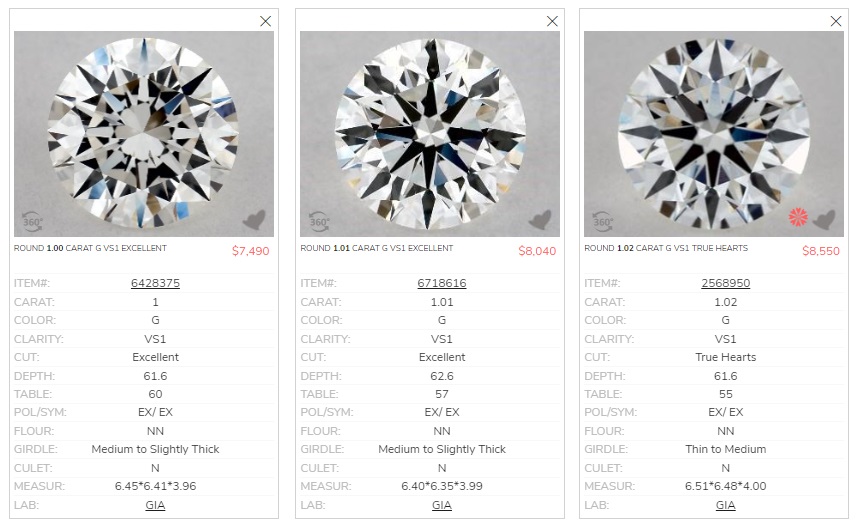
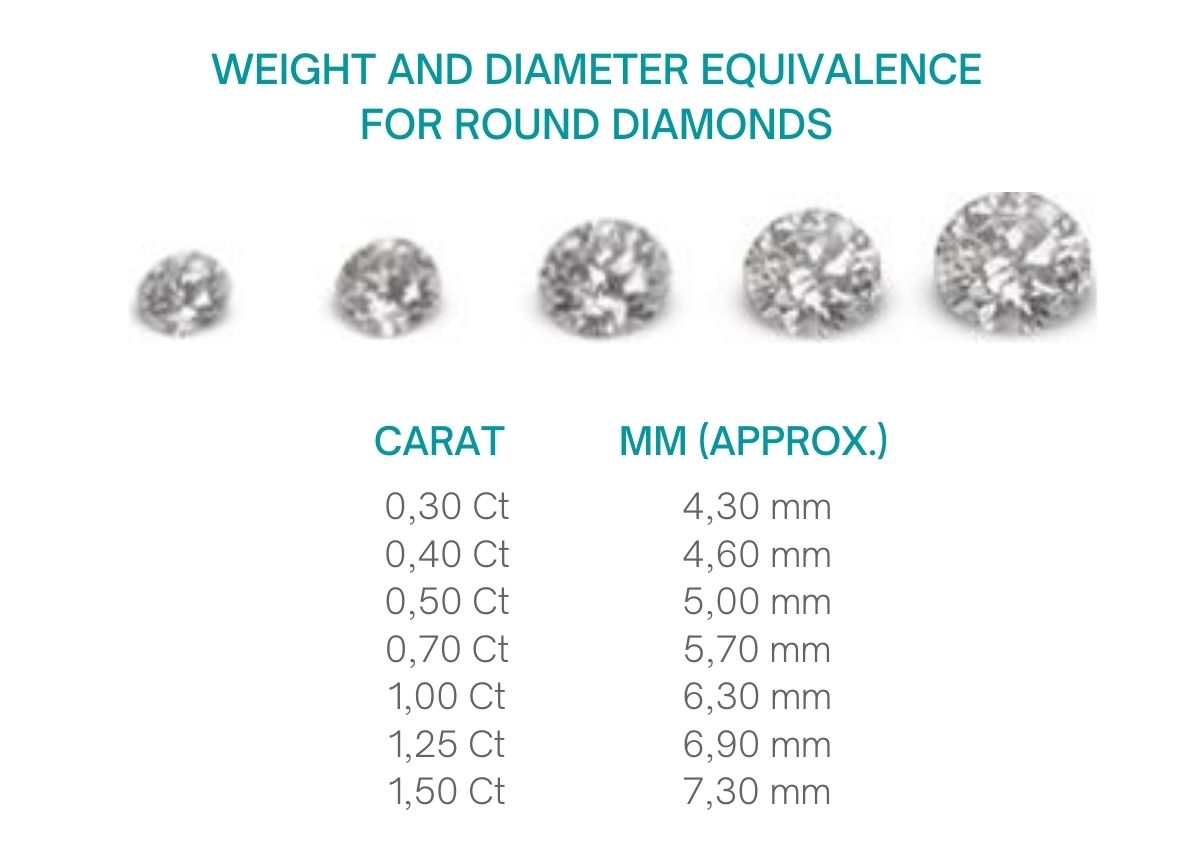
Carat weight is the most significant factor determining a diamond’s price. It directly correlates to the diamond’s size and weight, making it a key factor for consumers seeking a large and visually impressive diamond.
Diamond Carat Weight and Price
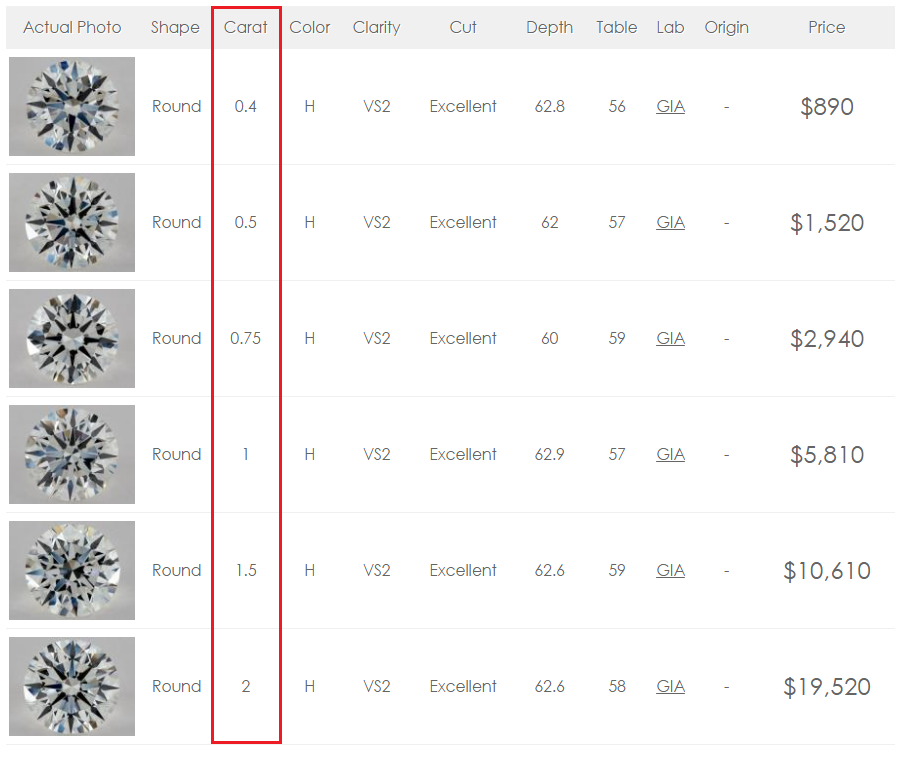
The price of a diamond increases exponentially with its carat weight. This means that a 1-carat diamond will cost significantly more than a 0.50-carat diamond, and a 2-carat diamond will cost even more than a 1-carat diamond.
Here’s a general overview of price brackets for different carat weight ranges:
| Carat Weight Range | Price Bracket |
|---|---|
| 0.25 – 0.49 carats | Entry-level |
| 0.50 – 0.99 carats | Mid-range |
| 1.00 – 1.99 carats | Premium |
| 2.00 carats and above | Luxury |
While these are general price brackets, the actual price of a diamond can vary depending on its cut, color, clarity, and other factors.
Diamond Prices Per Carat for Different Sizes
Here are some examples of diamond prices per carat for various sizes, based on average market prices:
* 0.50 carat diamond: $1,500 – $3,000 per carat
* 1 carat diamond: $4,000 – $8,000 per carat
* 2 carat diamond: $10,000 – $20,000 per carat
These are just estimates, and the actual price can fluctuate depending on the diamond’s quality and market conditions.
The 4Cs
The 4Cs—color, clarity, cut, and carat—are the four key factors that determine a diamond’s quality and, consequently, its price. These characteristics are assessed by gemologists using standardized scales and criteria, and understanding their influence is crucial for anyone buying or selling diamonds.
Color
A diamond’s color grade reflects its lack of color, as a truly colorless diamond is extremely rare. The Gemological Institute of America (GIA) uses a letter scale ranging from D (colorless) to Z (light yellow or brown) to assess color.
- Diamonds with a higher color grade, closer to D, are considered more valuable and command higher prices per carat.
- Diamonds with lower color grades, closer to Z, are more affordable but may have a noticeable yellow or brown tint.
The price difference between a D-color and an I-color diamond can be significant, with a D-color diamond often costing 20-30% more per carat than an I-color diamond.
Clarity
Clarity refers to the presence or absence of internal inclusions (imperfections) and external blemishes on a diamond. These imperfections can affect a diamond’s brilliance and fire, and their size, number, and location are assessed by gemologists using a microscope.
- Diamonds with fewer and smaller inclusions are considered more valuable and command higher prices per carat.
- Diamonds with more and larger inclusions are less valuable and are typically more affordable.
The GIA uses a clarity scale ranging from FL (flawless) to I3 (included, visible to the naked eye), with each grade representing a different level of clarity. A flawless diamond is extremely rare and commands a significant premium, while an I3 diamond may have noticeable inclusions that affect its brilliance.
Cut
Cut refers to the diamond’s proportions, symmetry, and polish, which affect its brilliance, fire, and scintillation. A well-cut diamond reflects light efficiently, creating a dazzling display of brilliance and fire.
- Diamonds with excellent cut grades, such as Excellent or Very Good, are more valuable and command higher prices per carat.
- Diamonds with lower cut grades, such as Fair or Poor, may have a dull appearance and lack brilliance.
The GIA uses a cut grading system to assess a diamond’s cut quality, with Excellent being the highest grade. A well-cut diamond will maximize its brilliance and fire, making it more desirable and valuable.
Carat
Carat refers to the weight of a diamond, and it is one of the most easily understood factors influencing price.
- Larger diamonds are generally more valuable and command higher prices per carat, as they are rarer and more desirable.
- Smaller diamonds are typically more affordable, but their value can still be significant, especially if they have high color, clarity, and cut grades.
The relationship between carat weight and price is not linear, with price increasing exponentially as carat weight increases. For example, a 1-carat diamond may cost twice as much as a 0.5-carat diamond, but a 2-carat diamond may cost four times as much as a 0.5-carat diamond.
The Impact of the 4Cs on Diamond Price
The 4Cs interact in complex ways to determine a diamond’s overall value and price.
- A diamond with an excellent cut grade but a lower color grade may still command a high price per carat if its clarity is high.
- Conversely, a diamond with a high color grade but a poor cut grade may be less valuable and command a lower price per carat.
The ideal diamond for a particular buyer will depend on their budget, preferences, and intended use.
Diamond Value and the 4Cs
The following table illustrates the impact of different grades within each C on diamond price:
| C | Grade | Impact on Price |
|—|—|—|
| Color | D (colorless) | Highest |
| | I (near colorless) | Moderate |
| | Z (light yellow) | Lowest |
| Clarity | FL (flawless) | Highest |
| | SI1 (slightly included) | Moderate |
| | I1 (included, visible to the naked eye) | Lowest |
| Cut | Excellent | Highest |
| | Very Good | Moderate |
| | Good | Lowest |
| Carat | 1 carat | Highest |
| | 0.5 carat | Moderate |
| | 0.25 carat | Lowest |
Diagram:
[Image of a diamond with the 4Cs labelled and arrows pointing to different areas of the diamond to show how each C affects its value.]
The diagram shows that a diamond’s value is influenced by all four Cs, with each C contributing to its overall brilliance, fire, and desirability. A diamond with high grades in all four Cs will be the most valuable, while a diamond with lower grades in one or more Cs will be less valuable.
Diamond Shape and Style
The shape of a diamond, also known as its cut, significantly impacts its price per carat. This is because different shapes emphasize different aspects of a diamond’s brilliance, fire, and scintillation. Understanding how shape affects price is crucial when selecting a diamond.
Diamond Shape and Price Per Carat
Diamond shapes can be categorized into two main groups: round brilliant and fancy shapes. Round brilliant diamonds are the most popular and commonly found shape. They are known for their symmetrical design and optimal brilliance. Fancy shapes, on the other hand, offer a wider range of styles and can be more unique.
- Round Brilliant: Round brilliant diamonds are the most expensive per carat due to their popularity, precision cutting, and optimal light performance. They offer maximum brilliance and fire, resulting in a captivating sparkle. Round brilliant diamonds are also considered a classic choice, making them a safe investment.
- Princess: Princess diamonds are square-shaped with pointed corners. They are known for their brilliance and fire, though slightly less than round brilliant diamonds. Princess diamonds are a popular choice for engagement rings due to their modern and geometric design.
- Emerald: Emerald diamonds are rectangular with step cuts that create a unique “hall of mirrors” effect. They are known for their clarity and brilliance, but their brilliance is less than round brilliant or princess diamonds. Emerald diamonds are a more unique and elegant choice, appealing to those who appreciate a vintage aesthetic.
- Oval: Oval diamonds are a combination of round and emerald cuts, offering a unique blend of brilliance and fire. They are known for their elongated shape, which makes them appear larger than round diamonds of the same carat weight. Oval diamonds are becoming increasingly popular for engagement rings and other jewelry.
- Pear: Pear diamonds are teardrop-shaped, offering a combination of brilliance and fire. They are known for their elongated shape, which makes them appear larger than round diamonds of the same carat weight. Pear diamonds are a popular choice for earrings and pendants.
Diamond Shape and Value Retention
The value retention of a diamond depends on several factors, including its shape, cut, clarity, and color. Some shapes are known for their strong value retention, while others may be more susceptible to price fluctuations.
- Round Brilliant: Round brilliant diamonds have the strongest value retention due to their popularity and consistent demand. Their timeless design and optimal light performance ensure they remain desirable in the market.
- Princess: Princess diamonds also have good value retention, though slightly less than round brilliant diamonds. Their popularity and versatility make them a solid investment.
- Emerald: Emerald diamonds have lower value retention compared to round brilliant and princess diamonds. Their unique cut and potential for inclusions can affect their price and desirability.
- Oval: Oval diamonds are gaining popularity and have moderate value retention. Their unique shape and brilliance make them a good investment option, but their value may fluctuate depending on market trends.
- Pear: Pear diamonds have lower value retention compared to round brilliant, princess, and oval diamonds. Their unique shape and potential for inclusions can affect their price and desirability.
Diamond Shape and Potential for Appreciation
The potential for appreciation of a diamond depends on several factors, including its shape, cut, clarity, and color. Some shapes are known for their potential for appreciation, while others may be more susceptible to price fluctuations.
- Round Brilliant: Round brilliant diamonds have a high potential for appreciation due to their popularity and consistent demand. Their timeless design and optimal light performance ensure they remain desirable in the market.
- Princess: Princess diamonds also have a good potential for appreciation, though slightly less than round brilliant diamonds. Their popularity and versatility make them a solid investment.
- Emerald: Emerald diamonds have lower potential for appreciation compared to round brilliant and princess diamonds. Their unique cut and potential for inclusions can affect their price and desirability.
- Oval: Oval diamonds are gaining popularity and have moderate potential for appreciation. Their unique shape and brilliance make them a good investment option, but their value may fluctuate depending on market trends.
- Pear: Pear diamonds have lower potential for appreciation compared to round brilliant, princess, and oval diamonds. Their unique shape and potential for inclusions can affect their price and desirability.
The Influence of Certification and Origin
Diamond certification and origin play a crucial role in determining the price per carat. These factors provide valuable information about a diamond’s quality, authenticity, and ethical sourcing, influencing its desirability and ultimately its cost.
Diamond Certification Labs and Their Impact on Price
Diamond certification labs, such as the Gemological Institute of America (GIA) and the American Gem Society (AGS), are independent organizations that analyze diamonds and issue certificates that detail their characteristics. These certificates provide a standardized and objective assessment of a diamond’s quality, which is essential for buyers and sellers to make informed decisions.
The price per carat of a diamond can vary significantly depending on the certification lab that graded it. For example, diamonds certified by the GIA, the most widely recognized lab, generally command higher prices than those certified by other labs. This is because GIA certificates are considered the industry standard and are accepted worldwide.
Here is a table comparing the price per carat of diamonds certified by different labs:
| Certification Lab | Price per Carat (Approximate) |
|---|---|
| GIA | $5,000 – $10,000+ |
| AGS | $4,500 – $9,000+ |
| IGI | $4,000 – $8,000+ |
It is important to note that these are approximate price ranges and actual prices can vary depending on the specific characteristics of the diamond, such as its color, clarity, cut, and carat weight.
Diamond Origin and Its Influence on Price
The origin of a diamond, whether it is mined or lab-grown, also has a significant impact on its price per carat. Mined diamonds are extracted from the earth, while lab-grown diamonds are created in a controlled laboratory environment.
Lab-grown diamonds are generally less expensive than mined diamonds because they are produced more efficiently and without the environmental and social costs associated with mining. However, the price gap between mined and lab-grown diamonds is narrowing as technology advances and consumer demand for lab-grown diamonds increases.
Here is a table comparing the price per carat of mined and lab-grown diamonds:
| Diamond Origin | Price per Carat (Approximate) |
|---|---|
| Mined | $5,000 – $10,000+ |
| Lab-grown | $3,000 – $7,000+ |
While lab-grown diamonds are generally more affordable, mined diamonds are still considered more valuable due to their rarity and historical significance.
Market Factors and Price Fluctuations
The price of diamonds is not static and is influenced by a variety of factors that can cause significant fluctuations. These factors can be categorized into global economic trends, supply and demand dynamics, and geopolitical events.
Impact of Global Economic Trends
Global economic trends have a significant impact on the diamond market. Economic downturns, for example, can lead to a decrease in demand for luxury goods, including diamonds. This can result in lower prices as sellers try to move inventory. Conversely, periods of economic growth can lead to increased demand and higher prices.
- During the 2008 financial crisis, diamond prices fell by as much as 20% due to decreased consumer spending on luxury goods.
- In contrast, during the economic boom of the early 2000s, diamond prices rose significantly as consumers had more disposable income to spend on luxury items.
Supply and Demand Dynamics, How much does a diamond cost per carat?
The price of diamonds is also influenced by the interplay of supply and demand. When demand for diamonds exceeds supply, prices tend to rise. Conversely, when supply exceeds demand, prices tend to fall.
- Diamond production is controlled by a limited number of mining companies, which can influence supply and prices.
- The demand for diamonds is driven by factors such as consumer preferences, cultural trends, and economic conditions.
- Significant discoveries of new diamond deposits can lead to increased supply and lower prices.
- Changes in consumer preferences, such as a shift away from traditional diamond engagement rings, can also impact demand and prices.
Geopolitical Events
Geopolitical events can also have a significant impact on the diamond market. Conflicts in diamond-producing countries can disrupt production and lead to higher prices.
- The civil war in Sierra Leone in the 1990s led to a surge in the price of diamonds due to disruptions in production and concerns about “blood diamonds.”
- Sanctions imposed on diamond-producing countries can also affect supply and prices.
Final Wrap-Up: How Much Does A Diamond Cost Per Carat?
Understanding the factors that influence diamond prices per carat is essential for navigating this fascinating world. By considering the 4Cs, shape, certification, origin, and market forces, you gain valuable insights into the diamond market. Whether you’re a discerning buyer or a curious observer, this comprehensive guide empowers you to appreciate the intricacies of diamond pricing and make informed decisions.
Detailed FAQs
What is the average price per carat for a diamond?
The average price per carat for a diamond varies greatly depending on the 4Cs, shape, certification, and other factors. However, as a general guideline, prices can range from a few hundred dollars per carat for smaller, lower-quality diamonds to tens of thousands of dollars per carat for larger, high-quality stones.
Are diamonds a good investment?
Diamonds can be considered an investment, but it’s important to understand the risks involved. Their value can fluctuate based on market conditions, and liquidity can be a concern. If you’re considering diamonds as an investment, consult with a financial advisor and research market trends.
How can I find a good deal on a diamond?
To find a good deal, shop around, compare prices from different jewelers, and understand the 4Cs. Consider purchasing from reputable jewelers with a strong track record and certifications from reputable labs.