What are the 4 Cs of diamonds? These four criteria – cut, color, clarity, and carat weight – are the foundation of diamond grading and evaluation. The 4Cs were developed in the 20th century by the Gemological Institute of America (GIA) and have become the universally accepted standard for assessing a diamond’s quality and value. Understanding the 4Cs empowers you to make informed decisions when purchasing a diamond, ensuring you get the most value for your investment.
The 4Cs work in tandem to influence a diamond’s brilliance, fire, and overall appearance. Each aspect plays a crucial role in determining the diamond’s desirability and price. By understanding the intricacies of each C, you can decipher the subtle differences between diamonds and appreciate the unique qualities that make each stone special. Let’s explore each C in detail and discover how they work together to create a stunning gemstone.
Introduction to the 4Cs of Diamonds
The 4Cs of diamonds – Cut, Clarity, Color, and Carat Weight – are the fundamental parameters used to evaluate and grade diamonds. They represent a standardized system that ensures transparency and consistency in the diamond market, enabling buyers to make informed decisions based on objective criteria.
The 4Cs play a crucial role in determining a diamond’s value and desirability. By understanding these factors, potential buyers can assess the quality and beauty of a diamond and make an informed choice that aligns with their budget and preferences.
The Historical Context of the 4Cs
The 4Cs system emerged in the early 20th century, with the Gemological Institute of America (GIA) playing a pivotal role in its development and standardization. Prior to this, diamond grading was subjective and lacked a uniform framework.
The GIA’s introduction of the 4Cs revolutionized the diamond industry, bringing about a greater degree of transparency and consistency in diamond grading. This standardization facilitated a more organized and reliable diamond market, benefiting both buyers and sellers.
The Impact of the 4Cs on the Diamond Industry
The 4Cs have had a profound impact on the diamond industry, shaping its practices and influencing its global trade.
Standardization and Transparency
- The 4Cs provided a standardized system for grading diamonds, ensuring consistency and objectivity in evaluations.
- This standardization facilitated a more transparent diamond market, enabling buyers to confidently assess the quality and value of diamonds based on objective criteria.
Increased Consumer Confidence
- The 4Cs empowered consumers with the knowledge and tools to make informed decisions when purchasing diamonds.
- This increased consumer confidence contributed to the growth and stability of the diamond market.
Global Trade and Market Regulation
- The 4Cs became a universally recognized standard for diamond grading, facilitating global trade and promoting a more regulated market.
- The standardization ensured that diamonds could be traded consistently across different regions and countries, contributing to a more efficient and reliable global diamond market.
Innovation and Advancement
- The 4Cs spurred innovation in diamond cutting and polishing techniques, as manufacturers sought to enhance the brilliance and fire of diamonds.
- This ongoing pursuit of excellence has led to advancements in diamond grading technology, further enhancing the accuracy and reliability of diamond evaluations.
Cut
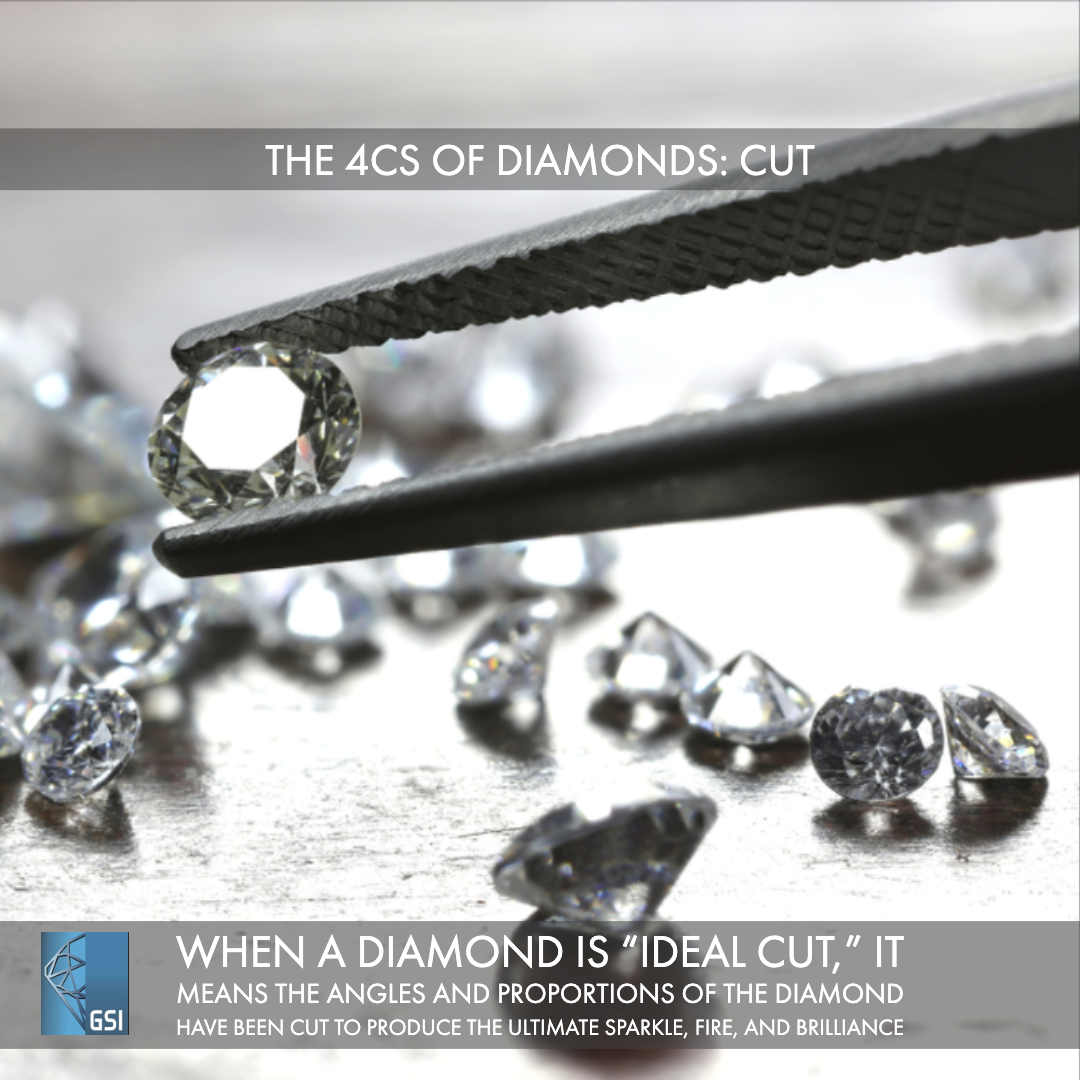
The cut of a diamond is the most important of the 4Cs, as it directly impacts how light interacts with the stone, influencing its brilliance, fire, and scintillation. A well-cut diamond reflects light back to the viewer, creating a dazzling display of sparkle.
A diamond’s cut refers to the proportions, angles, and symmetry of its facets. These facets are precisely placed to maximize light reflection and refraction, resulting in a visually stunning effect.
Diamond Cut Shapes, What are the 4 Cs of diamonds?
The shape of a diamond is determined by the arrangement of its facets. While round brilliant diamonds are the most popular, various other shapes offer unique characteristics and aesthetics.
- Round Brilliant: This classic cut is known for its brilliance and fire. It features 58 facets, including a table (flat top), crown (upper part), and pavilion (lower part). Round brilliants are typically graded on a scale from Excellent to Poor, with Excellent cuts maximizing light return.
- Princess: Square or rectangular in shape, princess cuts feature a large table and a smaller pavilion. They are known for their brilliance and sharp corners.
- Emerald: Emerald cuts are characterized by their step-cut facets, which create a rectangular shape with long, parallel lines. They are known for their distinctive “hall of mirrors” effect, where light reflects back in a straight line.
- Oval: Oval cuts are a combination of round and emerald cuts, offering both brilliance and fire. They are elongated and resemble an egg shape.
- Marquise: Marquise cuts are known for their elongated shape, resembling a football or an almond. They feature a pointed end and a rounded center, creating a unique and elegant look.
- Pear: Pear cuts are teardrop-shaped diamonds with a pointed end and a rounded bottom. They combine the brilliance of round cuts with the elegance of marquise cuts.
- Heart: Heart-shaped diamonds are known for their romantic appeal. They feature a pointed end and a curved bottom, resembling a heart. The cut requires careful precision to achieve a symmetrical shape.
- Cushion: Cushion cuts are square or rectangular with rounded corners. They offer a balance of brilliance and fire, with a vintage feel.
- Asscher: Asscher cuts are square-shaped diamonds with truncated corners and a large table. They are known for their unique geometric design and vintage appeal.
Cut Grade and its Impact
The cut grade of a diamond reflects its brilliance, fire, and scintillation. A higher cut grade indicates that the diamond is more efficiently cut, maximizing light reflection and creating a dazzling display of sparkle.
A well-cut diamond will appear brighter and more vibrant than a poorly cut diamond, even if they have the same carat weight and clarity.
- Brilliance: Brilliance refers to the overall amount of light reflected back to the viewer. A well-cut diamond will have high brilliance, appearing bright and lively.
- Fire: Fire refers to the flashes of colored light that are dispersed through the diamond. A well-cut diamond will exhibit a wide range of colors, creating a rainbow-like effect.
- Scintillation: Scintillation refers to the sparkle and brilliance of a diamond as it moves. A well-cut diamond will have a lively scintillation, creating a dynamic and captivating display.
Color
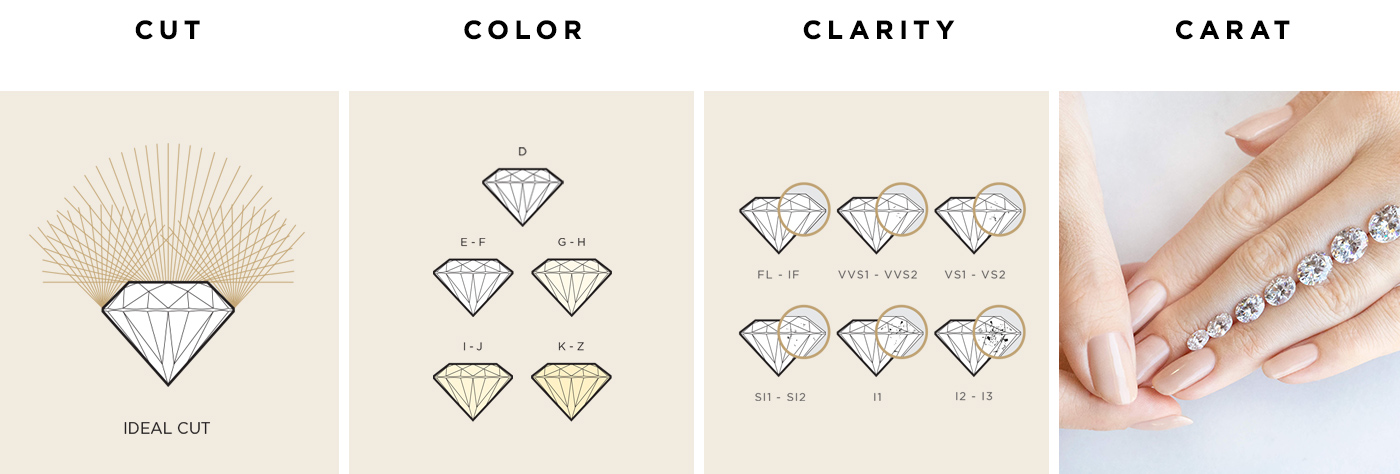
While cut is the most influential factor in a diamond’s brilliance, color is the second most important characteristic. A diamond’s color is graded on a scale from D (colorless) to Z (light yellow or brown). The scale was created by the Gemological Institute of America (GIA) and is used worldwide.
Diamond Color Grading Scale
The diamond color grading scale is based on the absence of color. The closer a diamond is to being colorless, the higher its grade and the more valuable it is. Diamonds with a slight yellow or brown tint are considered lower grades and are less expensive.
- D-F: These diamonds are considered colorless and are the most expensive. They are very rare and highly sought after.
- G-J: These diamonds have a very slight tint of yellow or brown. They are still considered to be white and are a good value for the money.
- K-M: These diamonds have a noticeable yellow or brown tint. They are less expensive than higher-grade diamonds and are often used in jewelry that is not meant to be a centerpiece.
- N-Z: These diamonds have a strong yellow or brown tint. They are the least expensive and are often used in industrial applications.
Factors Influencing a Diamond’s Color
Several factors can influence a diamond’s color, including:
- The presence of trace elements: The presence of trace elements, such as nitrogen, can give diamonds a yellow or brown tint. For example, diamonds with high nitrogen concentrations are often yellow.
- The diamond’s structure: The diamond’s structure can also affect its color. For example, diamonds with a lot of internal imperfections can appear cloudy or milky.
- The diamond’s size: Larger diamonds are more likely to have a noticeable color, as the color is more apparent in larger stones.
- The diamond’s cut: The diamond’s cut can also affect its color. For example, a diamond with a deep cut may appear darker than a diamond with a shallow cut.
Comparison of Different Color Grades
The difference in color between different grades can be subtle, but it can be significant when comparing diamonds side by side. For example, a diamond with a D color grade will appear completely colorless, while a diamond with a J color grade will have a very slight yellow tint. This difference in color may not be noticeable to the naked eye, but it can be significant when evaluating the diamond’s value.
| Color Grade | Price |
|---|---|
| D | Most expensive |
| E | Expensive |
| F | Expensive |
| G | Good value |
| H | Good value |
| I | Good value |
| J | Less expensive |
| K | Less expensive |
| L | Less expensive |
| M | Least expensive |
Carat Weight
Carat weight is a measure of a diamond’s size and is one of the most significant factors influencing its price. It represents the diamond’s weight in metric carats, with one carat equaling 0.2 grams. A larger carat weight generally translates to a more substantial and visually impressive diamond.
Relationship Between Carat Weight and Diamond Size
The relationship between carat weight and diamond size is not linear. Diamonds with the same carat weight can vary in size depending on their cut and shape. For example, a round brilliant diamond with a specific carat weight will appear smaller than an emerald-cut diamond with the same carat weight. This is because the round brilliant cut has a greater surface area, distributing the weight over a larger surface.
Factors Influencing Price Per Carat
Several factors contribute to a diamond’s price per carat, beyond its weight. These include:
- Cut: A well-cut diamond maximizes light reflection and brilliance, increasing its value. A poorly cut diamond, even with a higher carat weight, may appear dull and less desirable.
- Color: Diamonds range in color from colorless to yellow. Colorless diamonds are generally considered more valuable, while diamonds with a slight yellow tint can be more affordable.
- Clarity: Diamonds contain inclusions (internal imperfections) and blemishes (external imperfections). Diamonds with fewer inclusions and blemishes are rarer and more valuable. The clarity grade reflects the number and size of these imperfections.
- Rarity: The rarity of a diamond’s combination of carat weight, cut, color, and clarity significantly impacts its price. Rare combinations, like a large, colorless, flawless diamond, are extremely valuable.
- Market Demand: Fluctuations in market demand for diamonds of specific sizes and qualities can also affect their price per carat.
Carat Weight and Price Point
Here’s a general idea of how carat weight can affect the price of a diamond:
| Carat Weight | Price Point (Approximate) |
|---|---|
| 0.25 Carat | $200 – $500 |
| 0.50 Carat | $500 – $1,500 |
| 1.00 Carat | $2,000 – $6,000 |
| 2.00 Carat | $10,000 – $30,000 |
| 3.00 Carat | $30,000 – $100,000 |
It’s important to note that these are just approximate price ranges and can vary significantly based on the other 3Cs of diamond quality: cut, color, and clarity.
The 4Cs in Action: What Are The 4 Cs Of Diamonds?
The 4Cs of diamond grading work together to determine a diamond’s overall quality and value. Each factor interacts with the others, influencing the diamond’s brilliance, fire, and scintillation. Understanding how the 4Cs interact is crucial when selecting a diamond.
Examples of 4C Combinations and Prices
The interplay of the 4Cs significantly impacts a diamond’s price. Diamonds with higher grades in all four Cs are rarer and more expensive. Here are some examples:
- A 1-carat diamond with excellent cut, D color, and flawless clarity could cost upwards of $10,000. This diamond is exceptionally rare, showcasing exceptional brilliance and fire.
- A 1-carat diamond with good cut, H color, and SI1 clarity could cost around $3,000. This diamond has a more affordable price due to its lower clarity and color grades, though it still exhibits good brilliance.
- A 1-carat diamond with fair cut, I color, and I1 clarity could cost around $1,000. This diamond is significantly less expensive due to its lower grades in all four Cs, resulting in a less brilliant appearance.
Importance of Understanding the 4Cs
Understanding the 4Cs is essential for informed diamond purchasing. It allows you to:
- Compare diamonds accurately: The 4Cs provide a standardized system for comparing diamonds objectively. This helps you avoid paying more for a diamond that is not truly better quality.
- Set a realistic budget: Knowing the 4Cs helps you understand how different combinations of grades affect price. This allows you to set a realistic budget based on your desired diamond quality.
- Make informed decisions: By understanding the 4Cs, you can make informed decisions about which aspects of diamond quality are most important to you. For example, you might prioritize cut for brilliance or clarity for a flawless appearance.
Final Conclusion
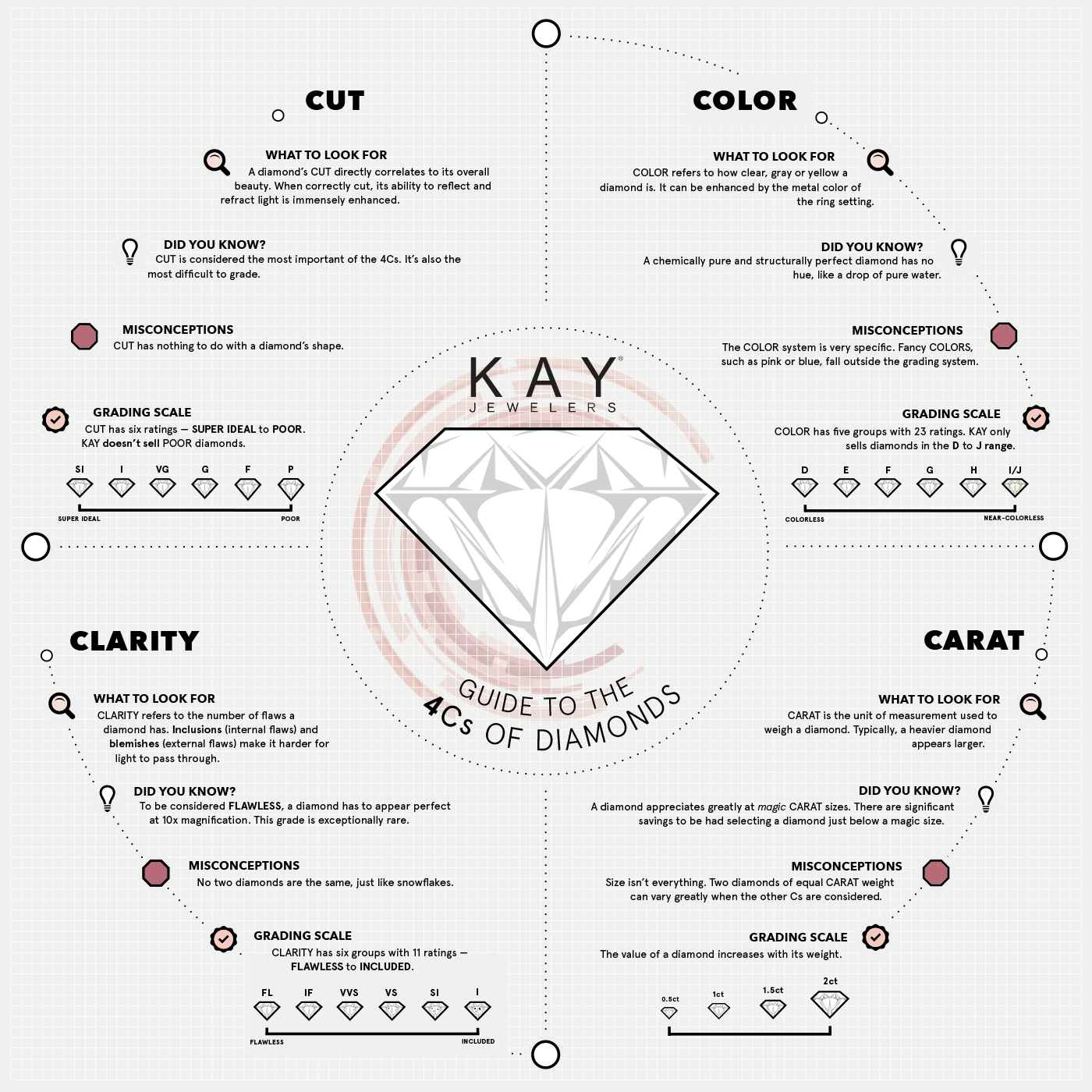
In conclusion, the 4Cs of diamonds provide a comprehensive framework for evaluating a diamond’s quality and value. By understanding the interplay of cut, color, clarity, and carat weight, you can make informed decisions when purchasing a diamond, ensuring that you select a stone that is both beautiful and a sound investment. Remember, the 4Cs are not just technical terms; they represent the unique characteristics that make each diamond a captivating and timeless treasure.
Question Bank
What is the difference between a diamond’s cut and its shape?
A diamond’s shape refers to its external Artikel, such as round, princess, or emerald. The cut refers to the angles and proportions of the facets, which determine how light interacts with the diamond, influencing its brilliance and fire.
Are all diamonds mined from the earth?
While most diamonds are mined from the earth, some are lab-grown. Lab-grown diamonds possess the same chemical composition and physical properties as mined diamonds but are created in a controlled laboratory environment.
How can I tell if a diamond is real?
It’s best to have a diamond professionally evaluated by a gemologist. However, you can perform a simple test by looking for the diamond’s “fire” (rainbow colors) and checking for inclusions (internal imperfections) that are visible under a loupe.